Cell & Gene Therapy: Status, Patient Experience, and Future Direction
AUTHOR: Dave Muggler- PatientSight | PUBLISHED: Apr 25, 2026
Cell and gene therapy (C/GT) has moved from scientific promise to clinical reality in a growing number of diseases, particularly in rare and genetic conditions. What was once considered experimental is now delivering meaningful outcomes for patients in areas such as hematologic cancers, hemophilia, sickle cell disease, and spinal muscular atrophy. In some cases, these therapies offer the potential for long-term remission or even functional cures, fundamentally changing expectations for treatment.
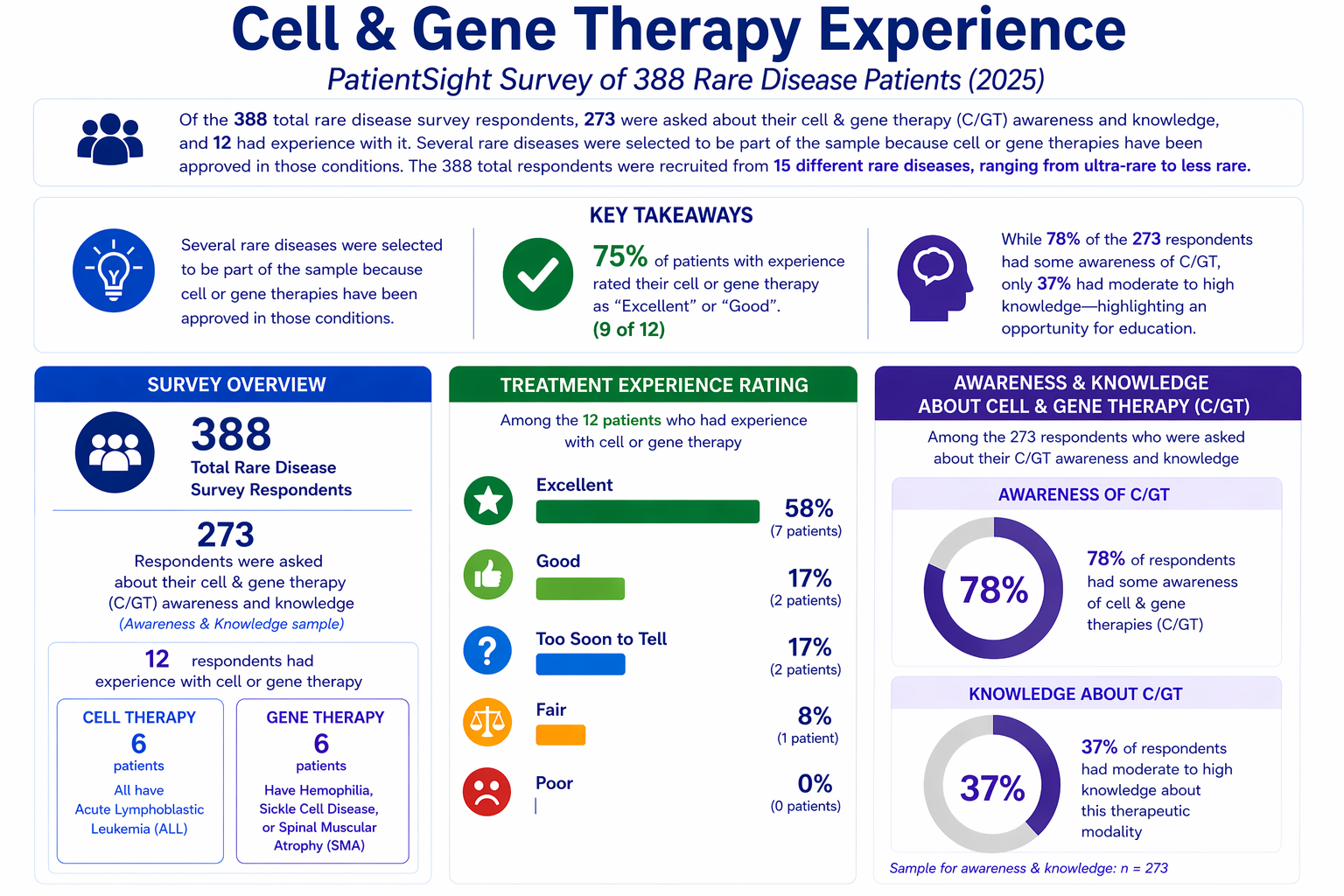
Despite this progress, adoption remains uneven. While awareness of C/GT is relatively high among patients, true understanding is more limited. Many patients are familiar with the concept of “gene therapy” or “cell therapy,” but lack clarity on how these treatments work, who they are for, and what the experience entails. This gap between awareness and understanding is important, particularly as more therapies enter the market and eligibility expands.
From a treatment experience perspective, early patient feedback is highly encouraging. Based on a small sample of survey respondents who have received cell or gene therapies, satisfaction tends to be strong, often driven by the potential for durable benefit and reduced long-term treatment burden. At the same time, these therapies can involve complex journeys, including referral to specialized centers, intensive monitoring, and uncertainty around outcomes. These factors make the patient experience surrounding access and delivery just as important as clinical efficacy.
Looking ahead, the field is rapidly evolving. Pipeline activity remains robust, with continued expansion into additional rare diseases and more common conditions. Advances in manufacturing, delivery methods, and safety profiles are expected to improve scalability and accessibility over time. However, as the science advances, so too must the way stakeholders understand and communicate these therapies. Ensuring that patients, caregivers, and healthcare providers have a clear, realistic understanding of what to expect will be critical to broader adoption.
Ultimately, cell and gene therapy represents not just a new class of treatments, but a shift in how disease is managed. As the field matures, success will depend not only on clinical innovation, but also on addressing the real-world experience of patients navigating these therapies- from awareness and education to access, treatment, and life beyond.