Dashboards vs. AI: Where are we now?
AUTHOR: Dave Muggler- PatientSight | PUBLISHED: Jul 30, 2026
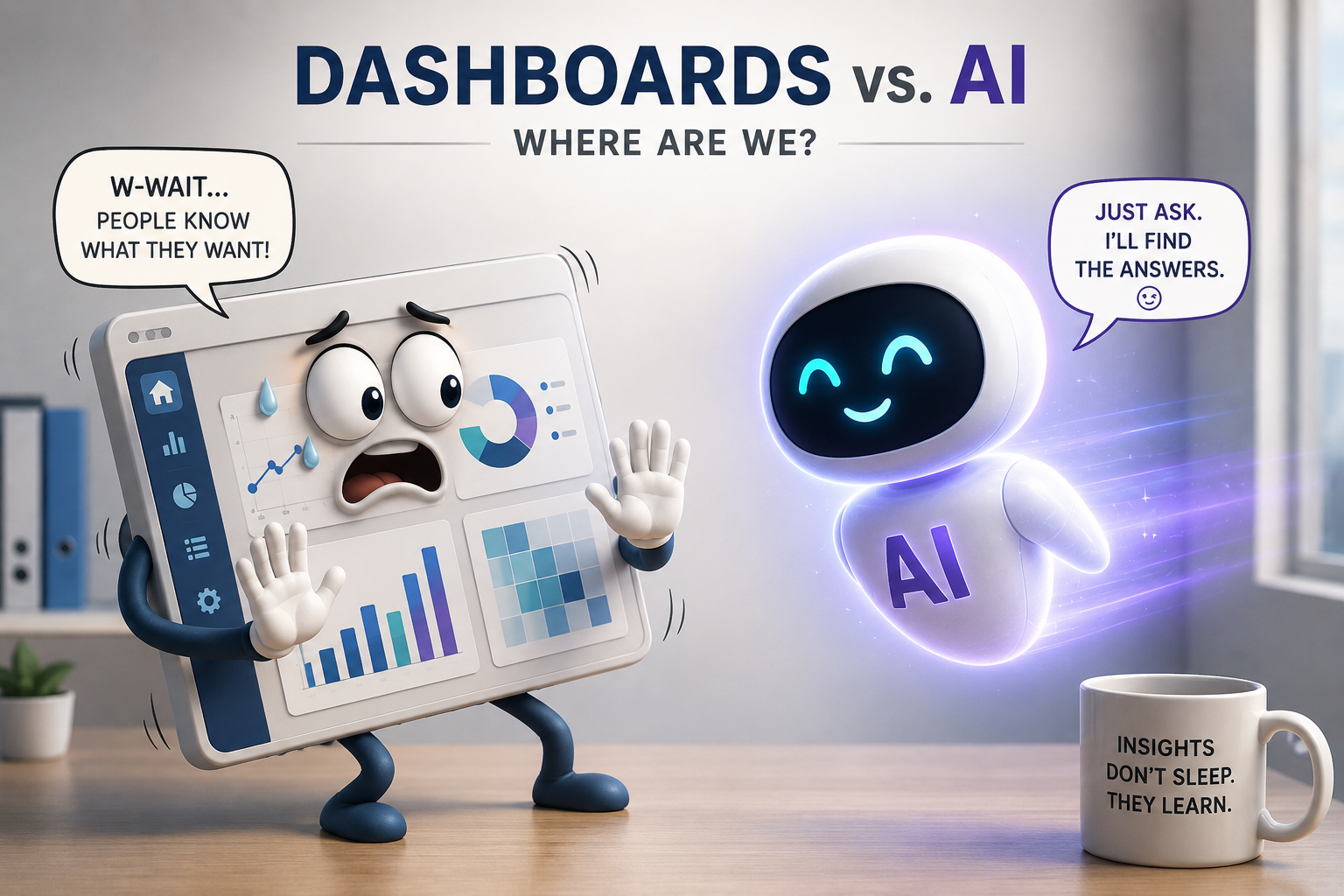
For years, dashboards have been the gold standard for analyzing survey data, and we use them frequently in our business. They provide users with an organized view of key findings and performance indicators (KPIs), allow filtering by respondent characteristics, and make it easy to compare results across brands, geographies, or time periods. Dashboards are familiar and remain an essential tool for decision-makers. What's not to like?
Today, however, artificial intelligence is changing how organizations can interact with data. Instead of clicking through filters and menus, users can simply ask questions in plain language and receive instant answers, visualizations, and summaries. This shift has led many to wonder whether AI will replace dashboards altogether.
The answer is: not anytime soon.
Dashboards and AI solve different problems, and for the foreseeable future they are likely to complement one another rather than compete.
Dashboards excel at presenting information that users know they want to monitor. A commercial leader may log in each week to review treatment satisfaction, patient support program ratings, or changes in patient-reported outcomes. These standard metrics provide a consistent pulse on performance and can quickly highlight areas requiring attention.
AI shines when users have questions that weren't anticipated when the dashboard was built. A marketer might ask, "How do newly diagnosed patients differ from those living with the disease for more than five years?" A patient services leader may want to know, "What themes are emerging among patients who report difficulty accessing treatment?" AI can analyze structured survey responses alongside open-ended comments, generate new charts on demand, and explain findings in plain language, usually within a minute or seconds.
This ability is particularly valuable because most business users are not trained data analysts. They don't want to decide which filters to apply, or which chart type best communicates a result. They simply want answers to business questions. AI lowers that barrier by translating natural language into meaningful analysis. Of course, the Insights & Analytics functions in an organization should remain the stewards of primary and secondary research data, even in the age of AI. They can provide the guardrails needed if other stakeholders wish to use an AI query tool.
The future is therefore unlikely to be dashboards or AI. Instead, it will be dashboards enhanced by AI. A dashboard will be the starting point, displaying the KPIs and trends that organizations monitor routinely. AI will become the exploration tool, allowing users to investigate unexpected findings, compare subgroups, and answer follow-up questions without waiting for an analyst to prepare a new report.
As AI continues to mature, the most successful research platforms will combine the strengths of both approaches. Dashboards will provide the structure and consistency that organizations depend on, while AI will provide the flexibility and speed needed to uncover new insights. Together, they will enable organizations to move beyond simply viewing data to truly interacting with it.